Starting retinoids after 40, slowly

How to start a retinoid after 40 without irritation — frequency, buffering, and patience.

1 min read skin-after-40 #retinoids #skin-after-40

How to start a retinoid after 40 without irritation — frequency, buffering, and patience.

Retinoids are the most evidence-backed anti-aging ingredient available without a prescription conversation. Most people quit them not because they fail, but because they start too fast.

Why go slow

A retinoid speeds skin-cell turnover. Introduced abruptly, that shows up as flaking and redness — the "retinoid uglies." Introduced gradually, skin adapts and the same product feels unremarkable.

A gentle start

  • Twice a week for the first two weeks, at night.
  • A pea-sized amount for the whole face — more is not better.
  • Moisturizer before and after ("sandwiching") if you feel any tightness.
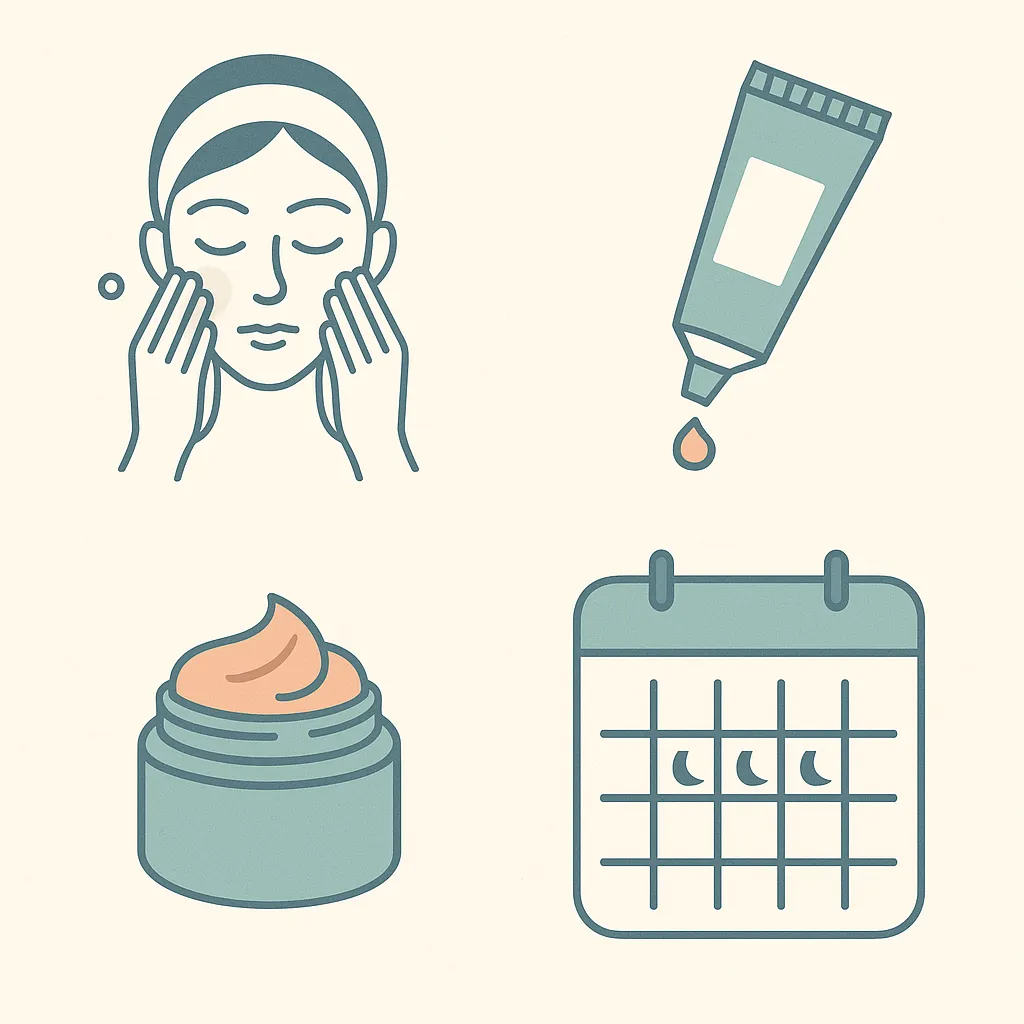
Four-stage illustrated retinoid night routine: cleanse, small amount, moisturize and space applications
A slow-start routine is easier to adjust than an aggressive one.

A low-friction start

  1. 1

    Start twice weekly

    Use it at night and leave recovery days between applications.

  2. 2

    Use a small amount

    A pea-sized amount is enough for the whole face.

  3. 3

    Moisturize

    Buffer with moisturizer if tightness or dryness is a problem.

  4. 4

    Increase slowly

    Add frequency only after the routine feels comfortable.

What to expect

Think in weeks, not days

  1. Weeks 1–2

    Adjustment

    Keep frequency low and watch for persistent irritation rather than trying to accelerate the process.

  2. Following weeks

    Build tolerance

    Increase only when the skin is comfortable at the current schedule.

  3. Around 12 weeks+

    Judge results

    Visible changes take time; short-term irritation is not evidence that more product is needed.

Build to every other night over a couple of months. Results in the mirror take twelve weeks or more, so judge it by the season, not the week.

Read the guides

Back to Library

Continue with the evidence

Related reading

Three nearby topics selected from the published library.