Exosome Skin Care: Promising Science—or Marketing Ahead of the Evidence?
An evidence-led guide to exosome skincare: what exosomes are, why source and formulation matter, where topical claims outrun the evidence, and why injectable products are a separate safety question.
3 min read By Dr. Lurie Science ingredients #ingredients #skin-science #skincare #marketing-claims #dermatology
Myth check
A biological object can be real while a product claim is still premature
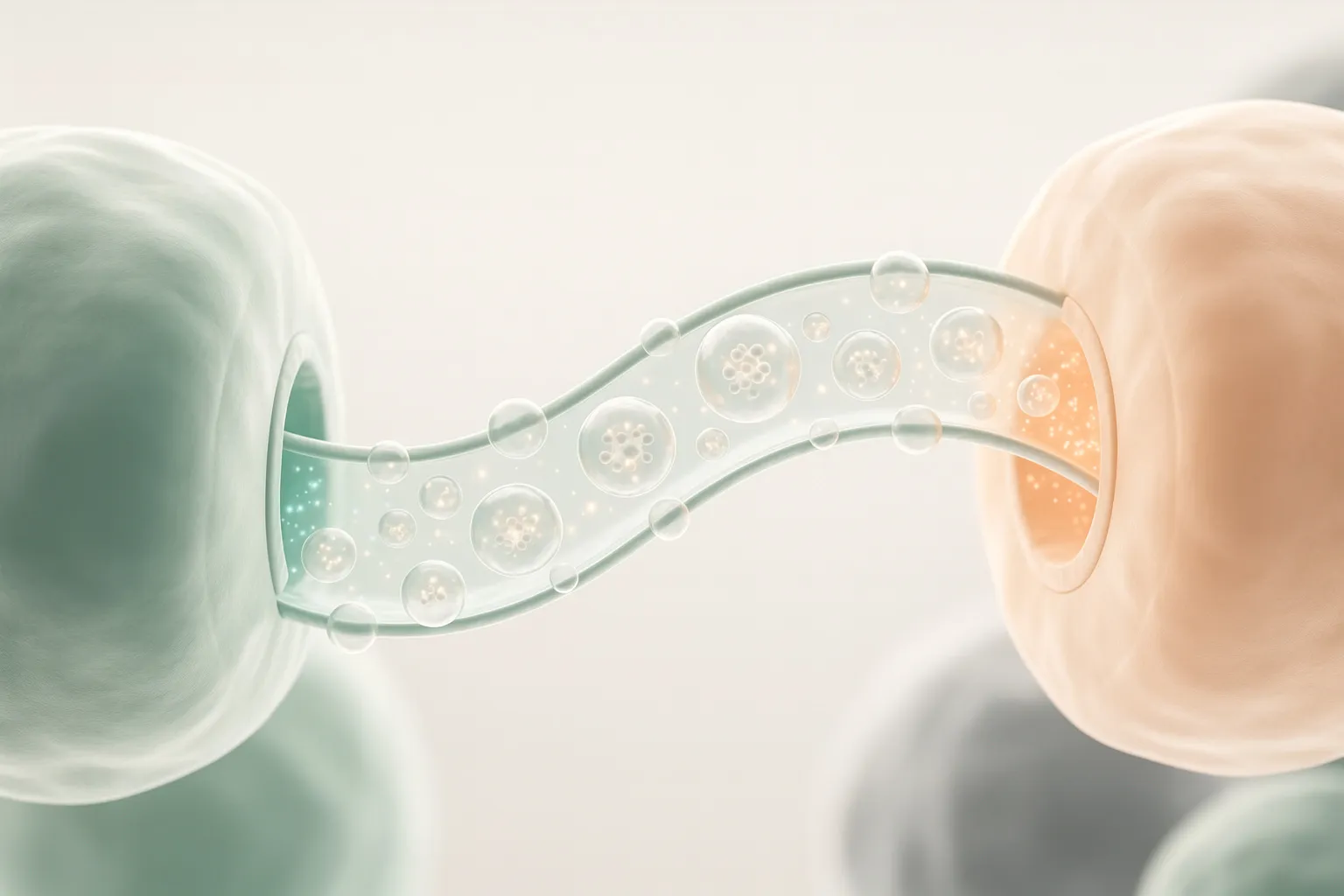
Exosomes are small extracellular vesicles released by cells. They can carry proteins, lipids and nucleic-acid material between cells, which makes them scientifically interesting as part of cell-to-cell communication.
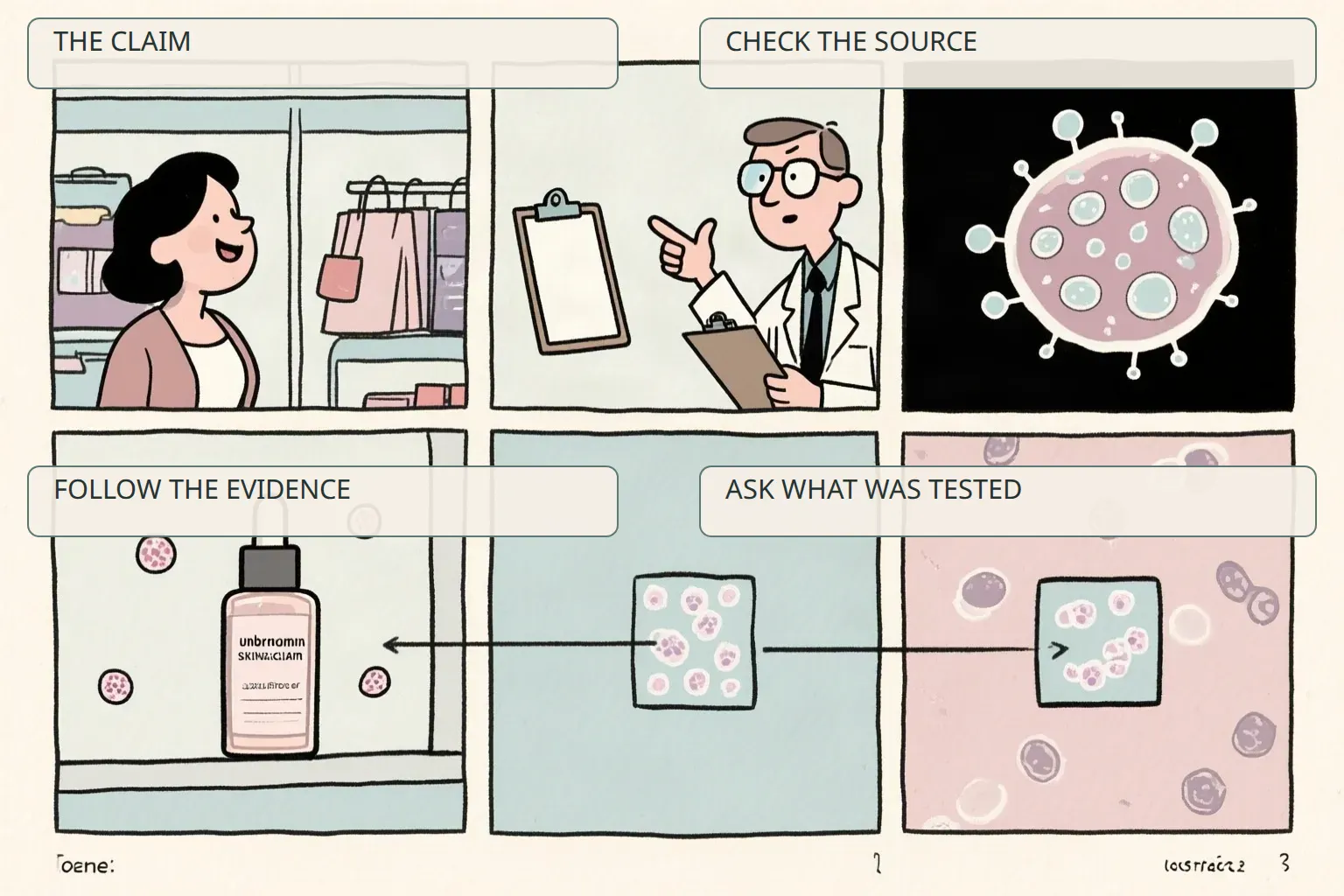
That biological reality is often compressed into a simpler cosmetic story: “cellular messages for younger skin.” The leap is larger than the slogan suggests. The source of the vesicles, how they were isolated, what else is in the preparation, how stable the material is, how it is delivered, and whether the finished product was tested all matter.
From a laboratory concept to a cosmetic bottle
Extracellular-vesicle research uses detailed characterization because preparations can differ. Cosmetic packaging rarely gives the reader that level of information.
A product may use “exosome” as a category label while leaving unanswered questions about source, purification, concentration, stability and delivery. That does not prove the product is ineffective. It means the label alone cannot establish what the product does.
Topical products and injections are not the same safety question
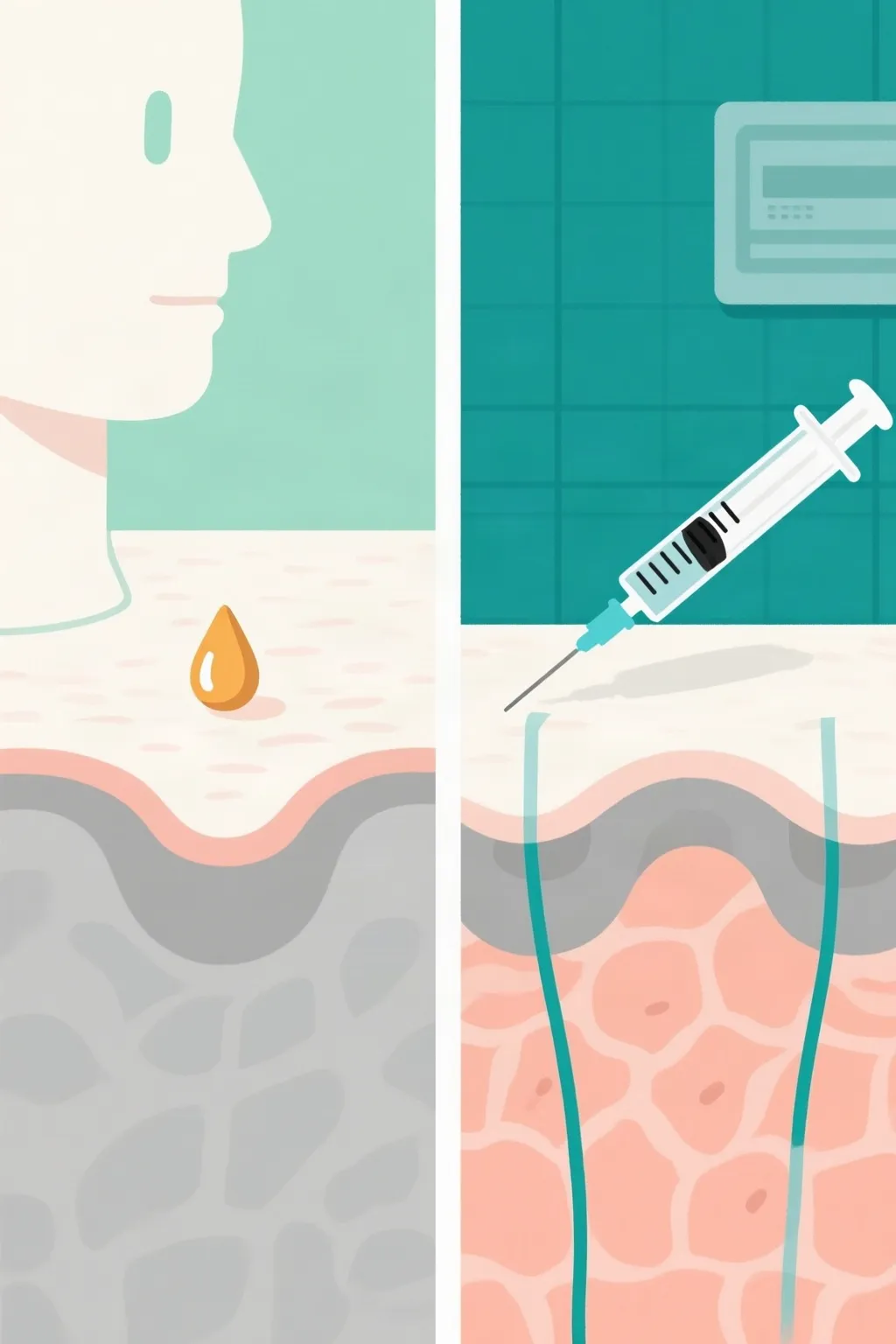
The U.S. Food and Drug Administration has warned about unapproved stem-cell and exosome products marketed for disease treatment. That warning is especially important when products are injected or otherwise used as biologic treatments.
A topical cosmetic serum is a different exposure. It should not borrow the authority of medical research on extracellular vesicles, and an injectable product should not be treated as if it were simply a stronger version of a cream. If a procedure involves injection or post-procedure use, discuss the specific product and evidence with the clinician performing the procedure.
The bottom line
Exosome science is real and worth following. Cosmetic certainty should move more slowly.
For a topical product, look for transparent sourcing, characterization and finished-formula evidence. For injections or procedure-associated products, the safety bar is much higher and belongs in a clinical conversation.
Sources
Minimal information for studies of extracellular vesicles (MISEV) — International Society for Extracellular Vesicles.
Public Safety Notification on Unapproved Stem Cell and Exosome Products — U.S. Food and Drug Administration.
How to Read Skincare Marketing Claims Without Getting Cynical — Dr. Lurie Science.
Read next
If you are evaluating a product whose scientific language is stronger than its product-specific evidence, use the claim-reading guide next.