PDRN Skin Care Is Everywhere. What Does the Evidence Actually Show?
An evidence-led look at PDRN in skincare, including what it is, where the strongest clinical evidence sits, and what remains uncertain.
5 min read By Dr. Lurie Science ingredients #ingredients #skin-science #skincare #skin-health
Ingredient review
PDRN is suddenly difficult to avoid. It appears in serums, creams, clinic treatments and product descriptions that often lean heavily on phrases such as “salmon DNA” and “skin regeneration.”
There is real science behind PDRN. But that does not mean every PDRN product has been shown to do what its marketing suggests. The useful question is not whether PDRN is interesting. It is where the evidence is strongest, and how much of that evidence applies to the product you are actually considering.
What is PDRN?
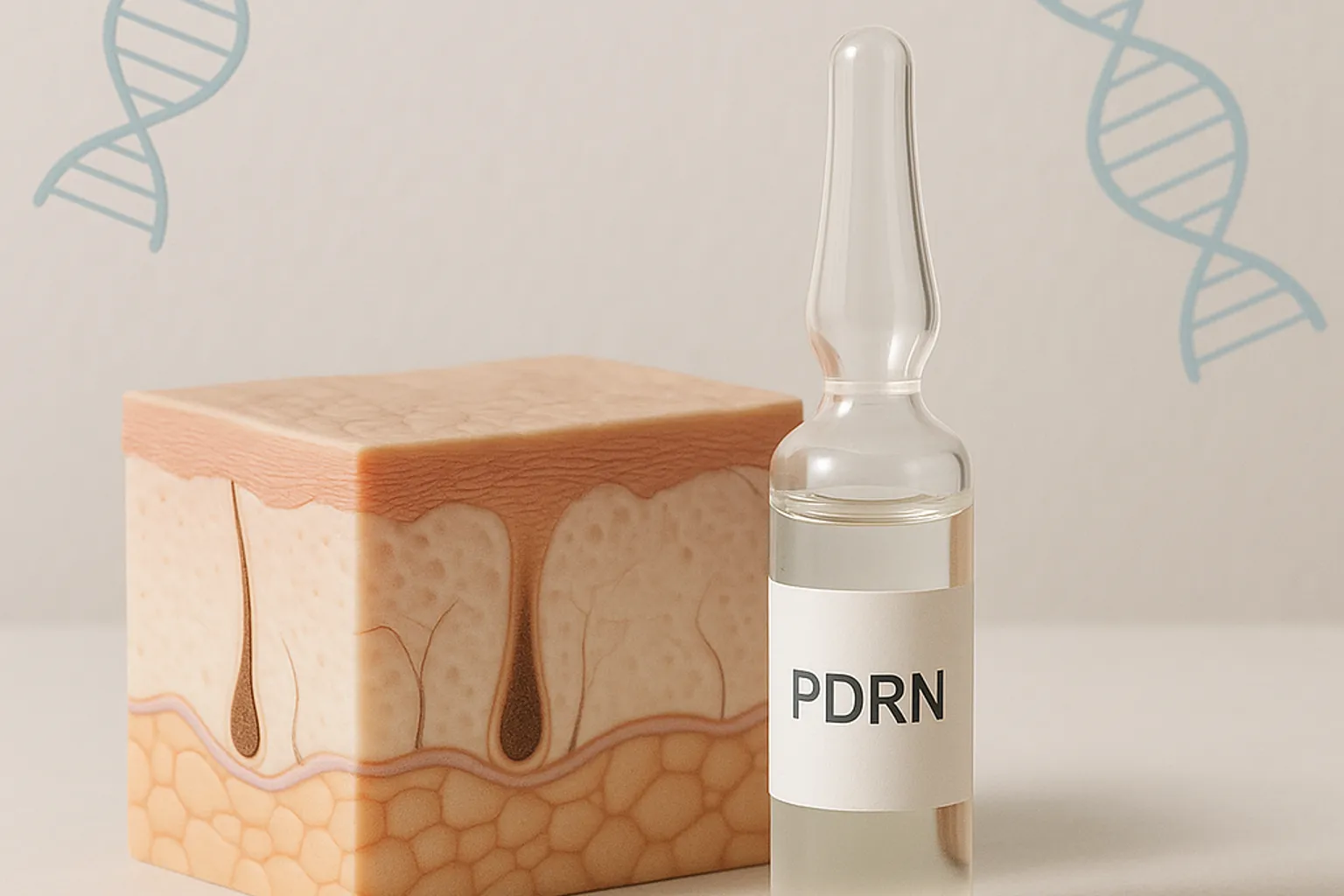
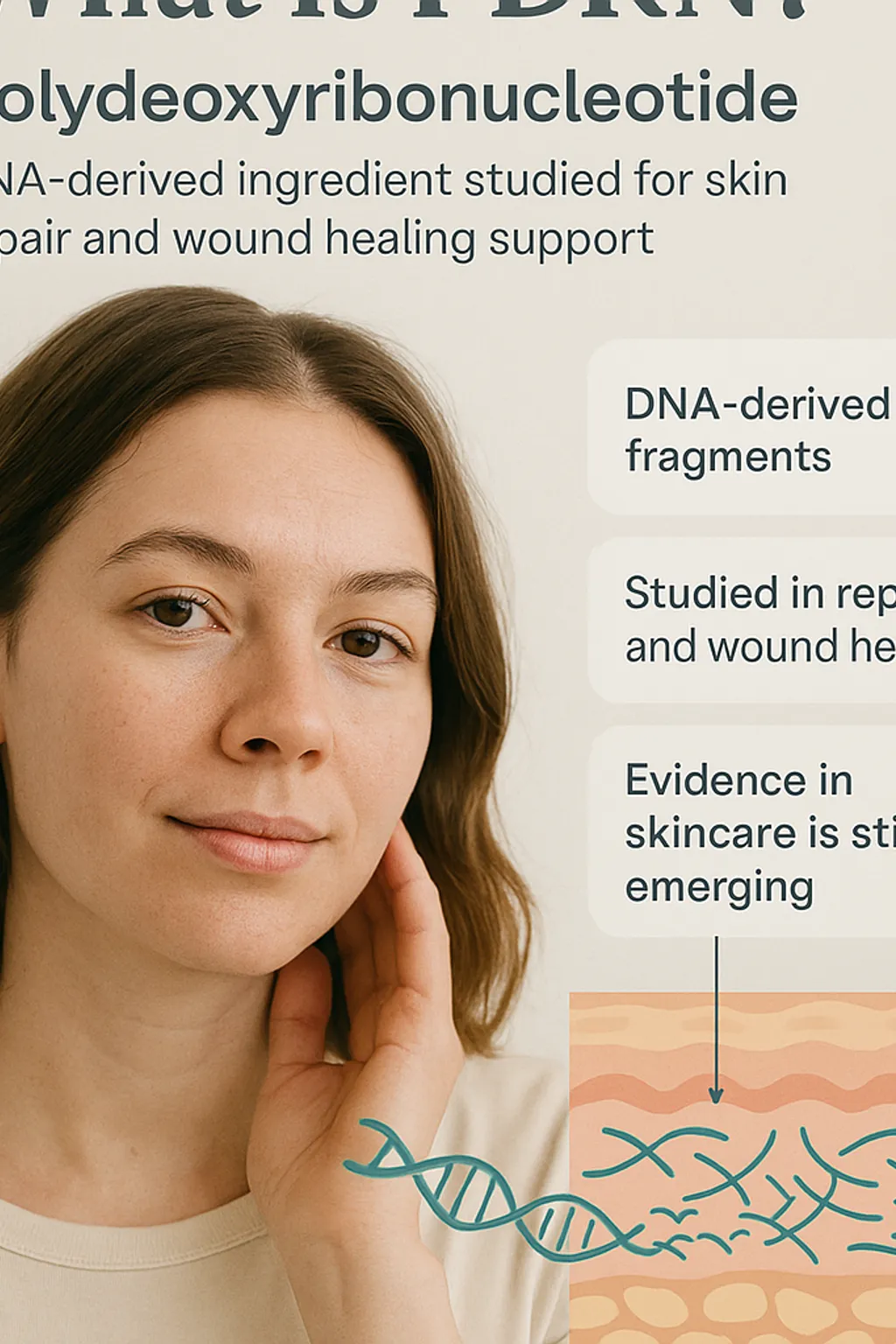
PDRN stands for polydeoxyribonucleotide. It is a mixture of DNA-derived fragments that has been studied for tissue repair, wound healing and regenerative effects.
Much of the medical literature involves purified PDRN preparations used in clinical settings rather than ordinary over-the-counter skincare. That distinction matters. A biological effect demonstrated in wound care or after a procedure does not automatically prove that a cosmetic serum delivers the same result.
Where the evidence is strongest
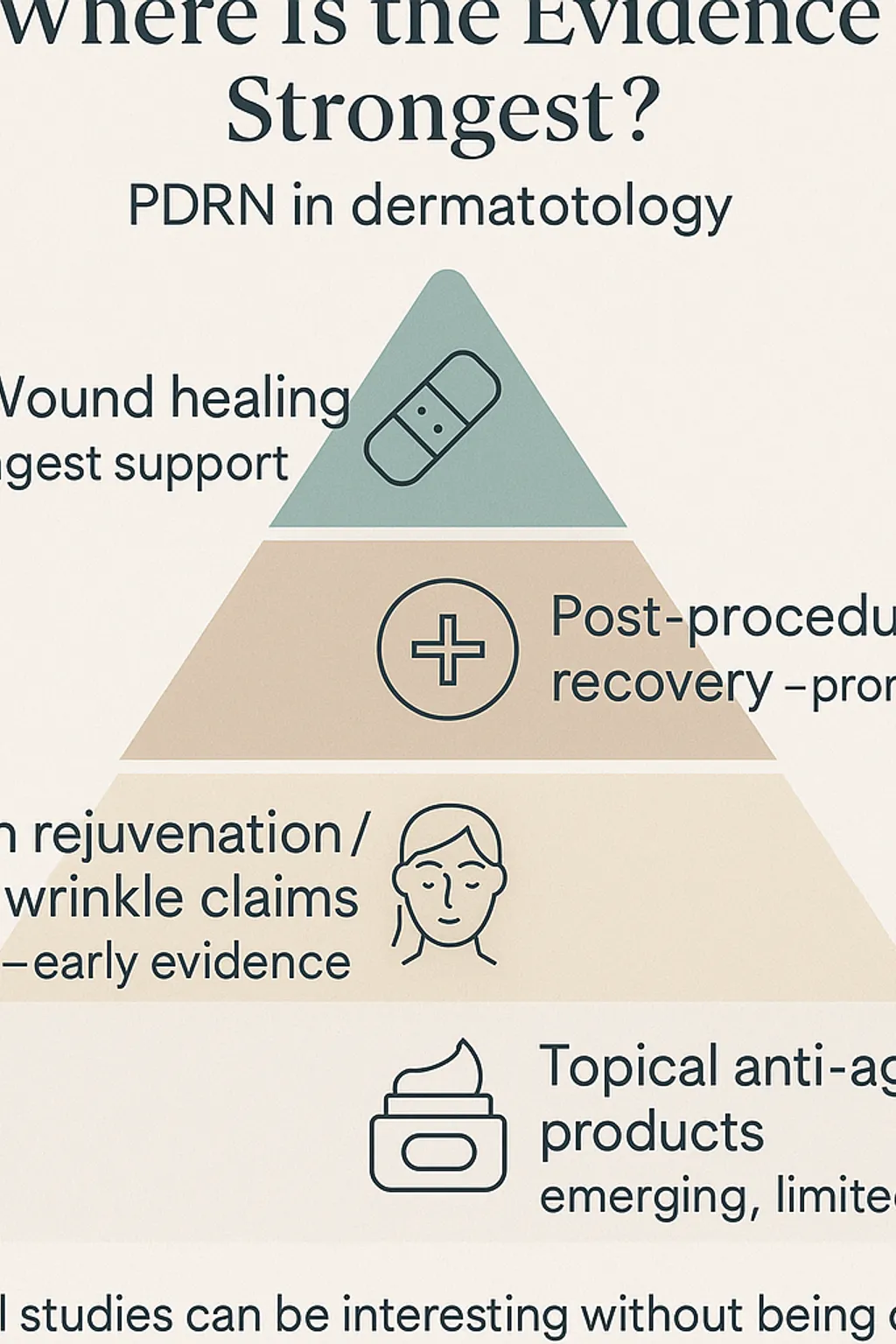
The clearest human evidence for PDRN is still around tissue repair and wound healing. A 2026 systematic review of randomized trials found the most consistent benefits in wound-healing settings, while also noting that the overall evidence base remains small and heterogeneous.
Post-procedure recovery is another area of growing interest. A 2026 narrative review found encouraging signals for re-epithelialization, erythema, scarring and recovery after aesthetic procedures, but also emphasized small samples, variable formulations and limited long-term follow-up.
That is a reasonable description of the field as a whole: promising, biologically plausible, and not yet mature.
What about topical PDRN?
Topical PDRN is the part consumers are now seeing most often — and it is also where caution becomes more important.
A recent randomized split-face study of a specific 0.1% medium-length PDRN eye cream reported improvements in periocular wrinkles and several skin measurements over 28 days. The same study also investigated skin penetration and laboratory mechanisms related to extracellular-matrix repair.
That is interesting evidence. It is not yet evidence that every PDRN cream or serum works, nor that PDRN as a class has been established as a replacement for better-studied ingredients. Formulation, molecular characteristics, concentration and delivery may all matter.
“Salmon DNA” is not a clinical claim
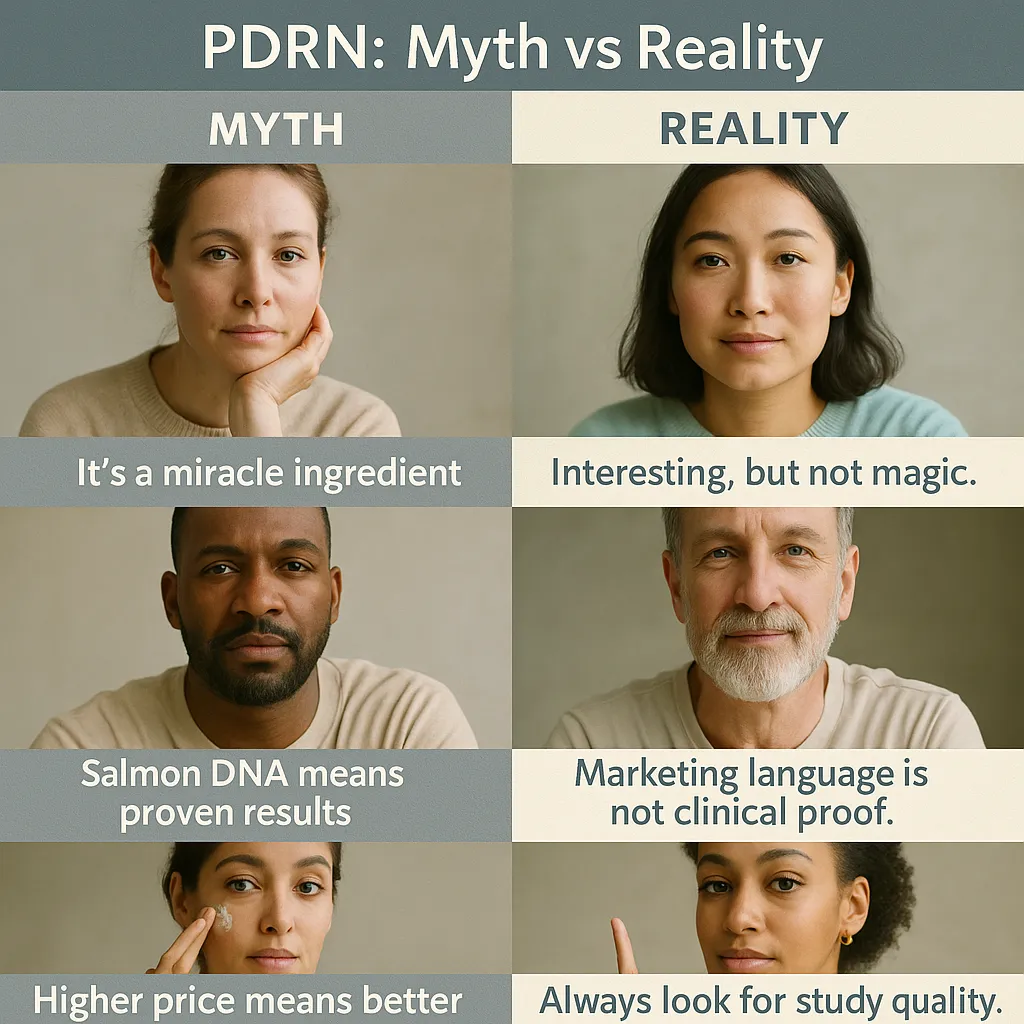
Many products describe PDRN as “salmon DNA.” That tells you something about the source material. It does not tell you whether the finished product has been tested well, whether the active material reaches the relevant skin layer, or whether the concentration is meaningful.
The phrase is memorable, which makes it useful marketing language. It should not substitute for information about the actual formulation or the quality of the evidence behind it.
How it compares with familiar skincare ingredients
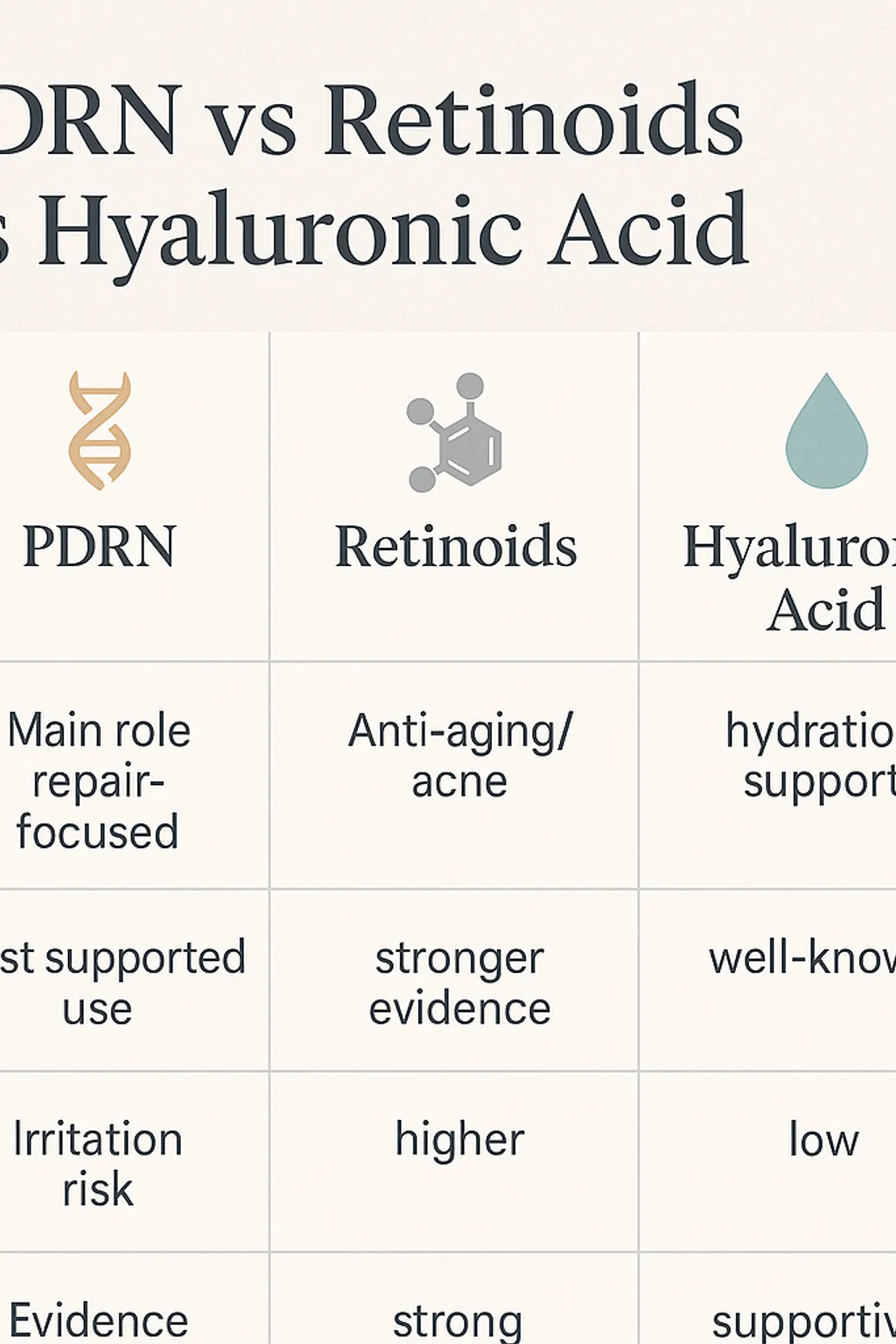
PDRN is best thought of as a repair-focused ingredient with emerging evidence. Retinoids sit in a different category: they have a much deeper evidence base for acne and photoaging, but they can also irritate skin. Hyaluronic acid is primarily a hydration-support ingredient and has a long history of cosmetic use.
These are not interchangeable ingredients. The right comparison depends on what you want the product to do.
Should you try it?
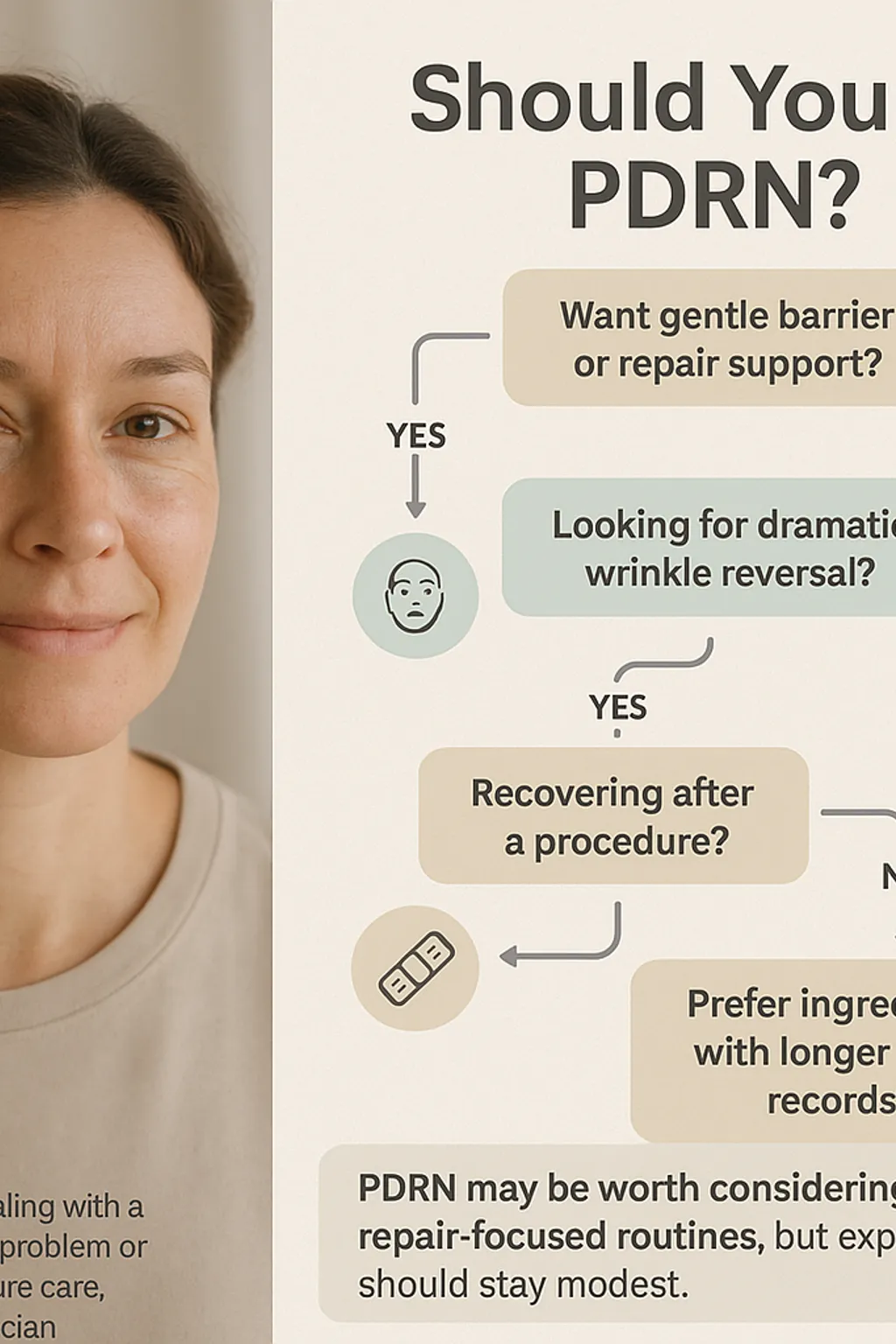
If you are curious about PDRN in a topical product, modest expectations are reasonable. Look for a clearly identified formulation, transparent concentration information where available, and evidence connected to the actual product rather than to PDRN in general.
If your goal is dramatic wrinkle reduction, acne treatment or treatment of a medical skin condition, PDRN should not displace better-established options or professional care. If you are recovering from a procedure, follow the instructions of the clinician who performed it rather than adding a new active on your own.
The bottom line
PDRN is more than a marketing invention. There is credible evidence for regenerative and wound-healing effects, and newer studies are beginning to test topical cosmetic formulations.
But “promising” and “proven” are different words. For ordinary skincare, the evidence is still developing, and the strongest claims should remain tied to the specific formulation and study — not to the ingredient name alone.
Sources
• Polynucleotides and Polydeoxyribonucleotides for Skin Rejuvenation, Postoperative Scar Prevention, and Wound Healing: A Systematic Review of Randomized Clinical Trials. 2026.
• Topical medium-length PDRN enhances dermal extracellular matrix repair in photodamaged skin via PI3K-Akt/TGF-β-regulated pathways. 2026.
• Polydeoxyribonucleotide (PDRN) in Post-procedure Recovery in Aesthetic Medicine: A Narrative Review. 2026.
• Comparison of Polynucleotide and Polydeoxyribonucleotide in Dermatology: Molecular Mechanisms and Clinical Perspectives. 2025.
One useful next step
If you are considering PDRN after a procedure or for a medical skin concern, ask your dermatologist or treating clinician whether the evidence applies to the specific formulation you are considering.