Tinted Sunscreen for Dark Spots: When Visible-Light Protection Matters
What tinted sunscreen adds for melasma and hyperpigmentation, how iron oxides work, and how to choose a formula without mistaking tint for better SPF.
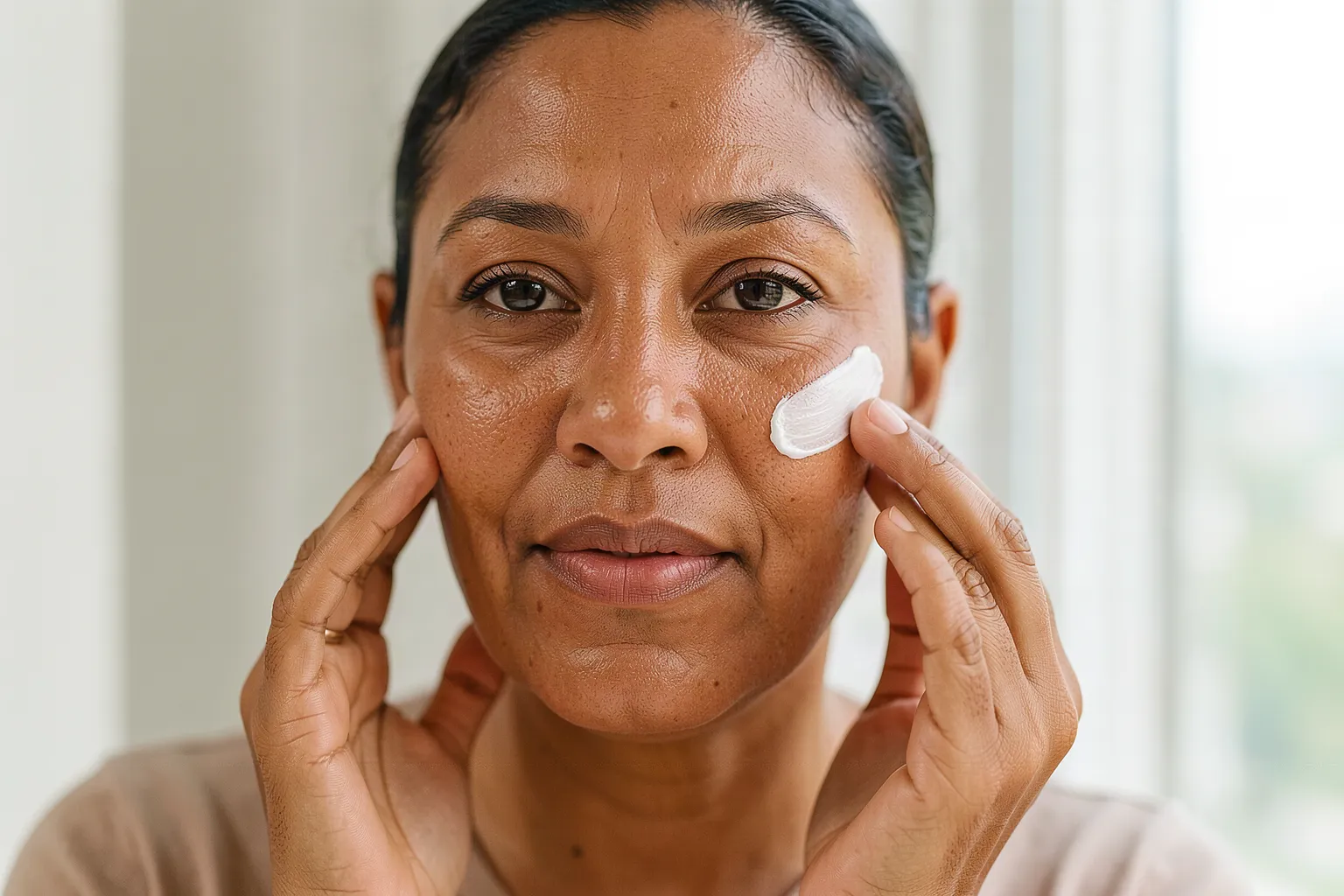
If you are trying to prevent melasma or dark marks from getting darker, the word “tinted” on sunscreen can matter for a reason that has nothing to do with makeup.
Ordinary broad-spectrum sunscreen is designed around ultraviolet radiation. That remains essential. But sunlight also contains visible light, and visible light can trigger or worsen pigmentation in some people—particularly people with darker skin tones and people with pigmentary conditions such as melasma.
Tinted sunscreens can add pigments, usually iron oxides, that reduce some of that visible-light exposure. The useful question is not whether tinted sunscreen is universally “better.” It is whether visible-light protection matches the problem you are actually trying to solve.
What visible light has to do with dark spots
Visible light sits next to ultraviolet radiation on the electromagnetic spectrum. It is the part of sunlight your eyes can see, roughly 400 to 700 nanometers.
Laboratory and clinical studies show that visible light can produce sustained pigmentation in more melanated skin. That matters most when pigmentation is already a concern: melasma, post-inflammatory hyperpigmentation, or dark marks that seem to return despite consistent UV protection.
This does not mean visible light is equally important for every person or every skin concern. For prevention of sunburn, skin cancer, and UV-driven photoaging, broad-spectrum UV protection remains the foundation.

What the tint actually adds
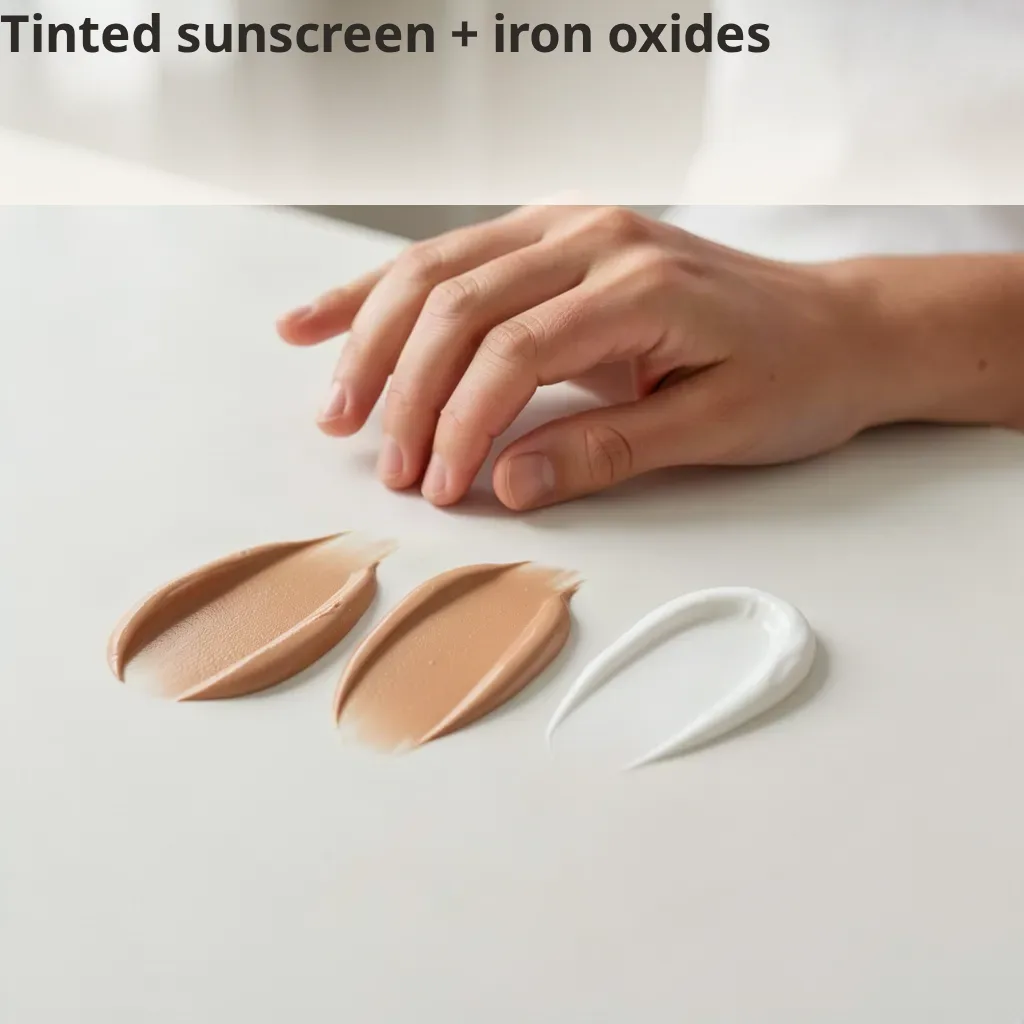
The tint usually comes from iron oxides—red, yellow, and black pigments blended to make a skin-toned shade. These pigments can absorb and scatter visible wavelengths that ordinary transparent sunscreen films do not block as well.
The best evidence is not just laboratory theory. In a randomized melasma trial, a sunscreen that included visible-light protection alongside UV protection improved pigment outcomes more than a UV-only sunscreen when both groups were also using hydroquinone. Other studies in darker skin phototypes have found less visible-light-induced pigmentation with iron-oxide-containing formulas than with untinted mineral sunscreen.
So the tint is doing two jobs at once: changing the cosmetic color of the product and, when the pigment system is appropriate, extending photoprotection beyond UV.
Who is most likely to benefit
Tinted sunscreen is most worth considering when unwanted pigmentation is one of your main concerns. Dermatologists commonly recommend iron-oxide-containing tinted sunscreen for melasma and for people with darker skin tones who are prone to hyperpigmentation.
That is different from saying everyone needs a tinted formula. If your main goal is reliable UV protection and you already use a broad-spectrum sunscreen consistently, an untinted product can still be an effective sunscreen.
The practical advantage matters too. A tint that blends well may avoid the gray or white cast some sunscreens leave on deeper skin tones. A product you are comfortable wearing is easier to use in the amount and frequency that sunscreen requires.
How to shop without overreading the label
Start with the sunscreen basics: broad-spectrum protection, SPF 30 or higher, and water resistance if you need it. Then look for a tint that actually matches your skin well enough to wear generously.
If visible-light protection is the goal, look for iron oxides in the ingredient list. In the United States they often appear among inactive ingredients because sunscreen “active ingredients” are defined around UV protection, not visible-light protection.
There is an important limitation: “tinted” is not a standardized measure of visible-light protection. A 2026 analysis of 37 tinted sunscreens found that iron-oxide concentration was rarely disclosed and that visible-light testing claims were inconsistent. The shade, pigment mix, concentration, film formation, and finished formula all matter.
That means two beige-looking sunscreens are not automatically equivalent just because both are tinted.
Four mistakes that make the tint less useful
1. Treating tint as a substitute for SPF. Iron oxides extend protection into visible light; they do not replace broad-spectrum UV protection.
2. Choosing the wrong shade and then applying too little. If the tint looks conspicuous at a useful amount, you are likely to under-apply it.
3. Assuming “mineral” automatically means visible-light protection. Modern zinc-oxide and titanium-dioxide sunscreens can be cosmetically transparent. The pigment system is what adds meaningful visible-light attenuation.
4. Expecting sunscreen alone to erase established melasma or post-inflammatory hyperpigmentation. Photoprotection helps prevent additional darkening and supports treatment, but persistent pigmentation may need a dermatologist-guided plan.
The bottom line
If dark spots or melasma are the problem, a tinted sunscreen with iron oxides is one of the few skincare choices where the color itself can have a biologic reason.
Keep the hierarchy clear. First, choose a broad-spectrum sunscreen you can use consistently. If pigmentation is a priority, add a tint that matches your skin and contains iron oxides. Then judge the finished product by whether you can apply enough of it without fighting the texture, shade, or cast.
A tint is not a promise of stronger SPF. It is a way to broaden photoprotection when visible light is part of the pigmentation problem.
Sources
American Academy of Dermatology. How to decode a sunscreen label.
He M, et al. Visible Light Protection: An Updated Review of Tinted Sunscreens. Photodermatology, Photoimmunology & Photomedicine. 2025.
Doan V, et al. Iron Oxides in Tinted Sunscreen for Hyperpigmentation: A Product Analysis and Literature Review. Journal of Drugs in Dermatology. 2026.
Castanedo-Cazares JP, et al. Near-visible light and UV photoprotection in the treatment of melasma: a double-blind randomized trial. 2014.
Dumbuya H, et al. Impact of Iron-Oxide Containing Formulations Against Visible Light-Induced Skin Pigmentation in Skin of Color Individuals. 2020.